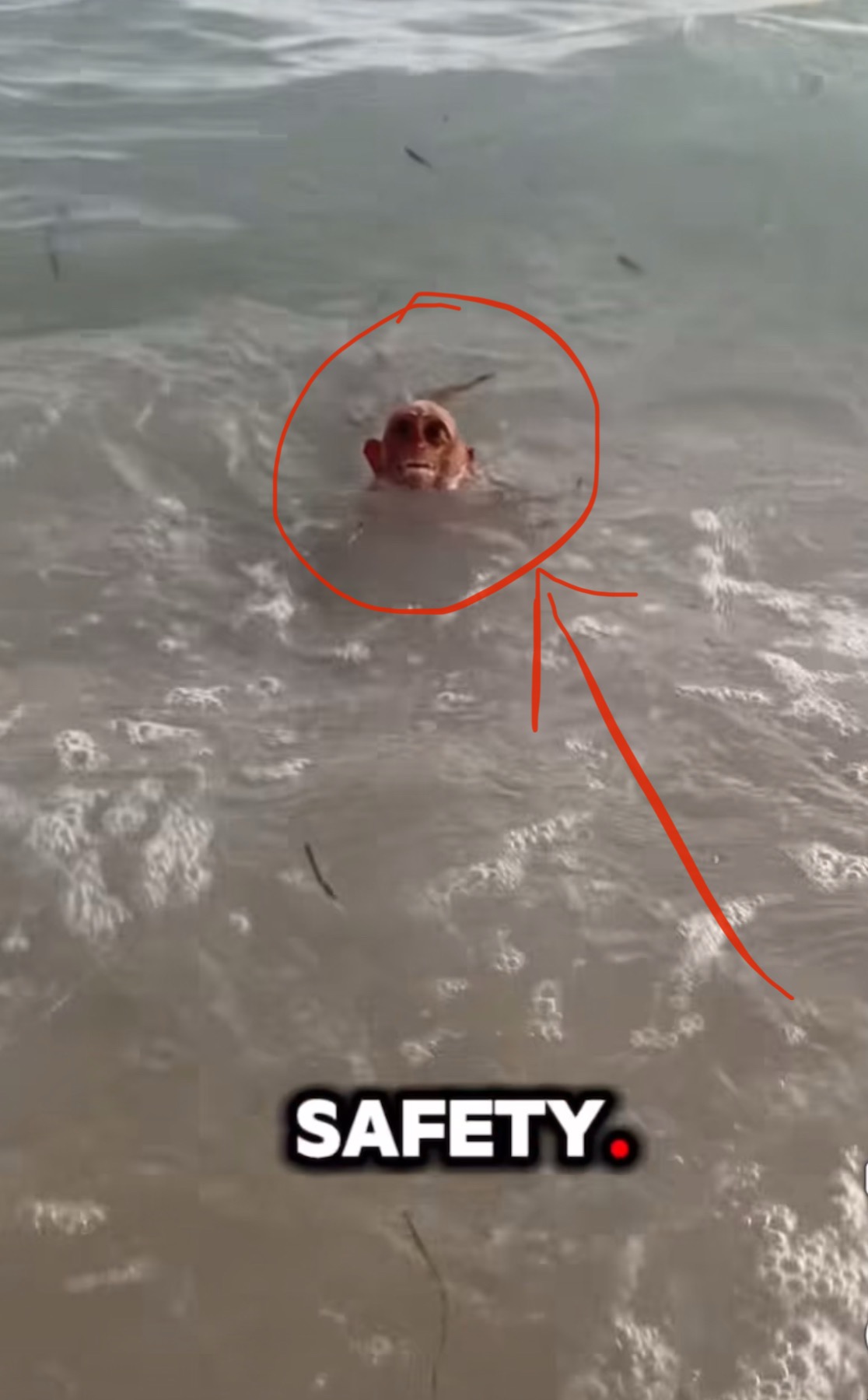
Encountering wildlife emergencies can be distressing, and one unusual but increasingly reported situation involves monkeys being found drowned along coastal regions. While such cases may seem rare, they do occur—especially in areas where monkeys live near beaches, mangroves, ports, or seaside cliffs. Knowing what to do can help protect both people and local ecosystems. Here is a clear guide on the proper steps to take when you find a drowned monkey in the sea.
1. Keep a Safe Distance
Even when deceased, wild animals can carry diseases or parasites that could pose risks to humans and pets. Do not touch, lift, or attempt to move the monkey with your bare hands. Maintaining distance is also important because some coastal areas have strict wildlife laws protecting native species.
2. Avoid Attempting Resuscitation
Unlike domesticated animals, wild monkeys require specialized handling. Attempting CPR or rescue without training can be dangerous and ineffective. If you witness the incident while it happens, the best action is to immediately alert trained wildlife responders rather than intervening on your own.
3. Contact Local Authorities
The next step is to report the discovery to the appropriate authority. This may include:
-
The local wildlife rescue organization
-
The municipal environmental department
-
Coast Guard or Marine Patrol
-
A nearby animal control unit
They will have the proper equipment and training to retrieve and handle the animal safely. In many countries, removing or disposing of a wild animal without authorization is illegal, which makes official reporting essential.
4. Document the Location
Providing clear information helps officials respond faster. Make note of:
-
The exact location (using GPS if possible)
-
The time and tide conditions
-
Any observable signs, such as wounds, entanglement in fishing gear, or nearby pollution
Photos can be helpful for authorities, as long as you maintain distance. Avoid sharing graphic images publicly, as this can spread misinformation or cause unnecessary alarm.
5. Look for Environmental Clues
Drowned wildlife can sometimes signal larger environmental issues. If you notice oil spills, plastic debris, fishing nets, or chemical runoff in the area, report these observations as well. Monkeys may fall into the sea due to habitat disturbances, shrinking coastal forests, or attempts to escape predators. Understanding the cause helps authorities address future risks.
6. Cooperate With Follow-Up Investigations
Wildlife departments may perform necropsies (animal autopsies) to determine the cause of death. Your report could be important in identifying threats such as illegal fishing methods, pollution, or habitat loss. If authorities need additional information, providing it helps improve conservation efforts in the region.
7. Support Local Conservation Efforts
Finally, consider contributing to local initiatives that protect coastal wildlife. Simple actions—like reducing plastic use, respecting monkey habitats, or supporting rescue organizations—can help reduce incidents like these.
Finding a drowned monkey in the sea can be upsetting, but responding calmly and responsibly ensures both public safety and ecological care. By reporting the situation to trained professionals and supporting long-term conservation, you play an important role in protecting vulnerable wildlife in coastal environments.