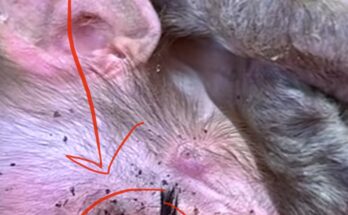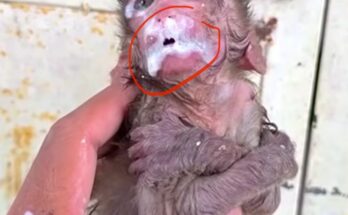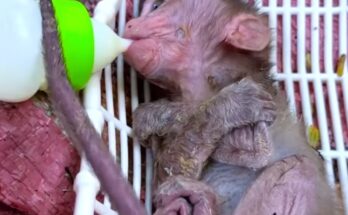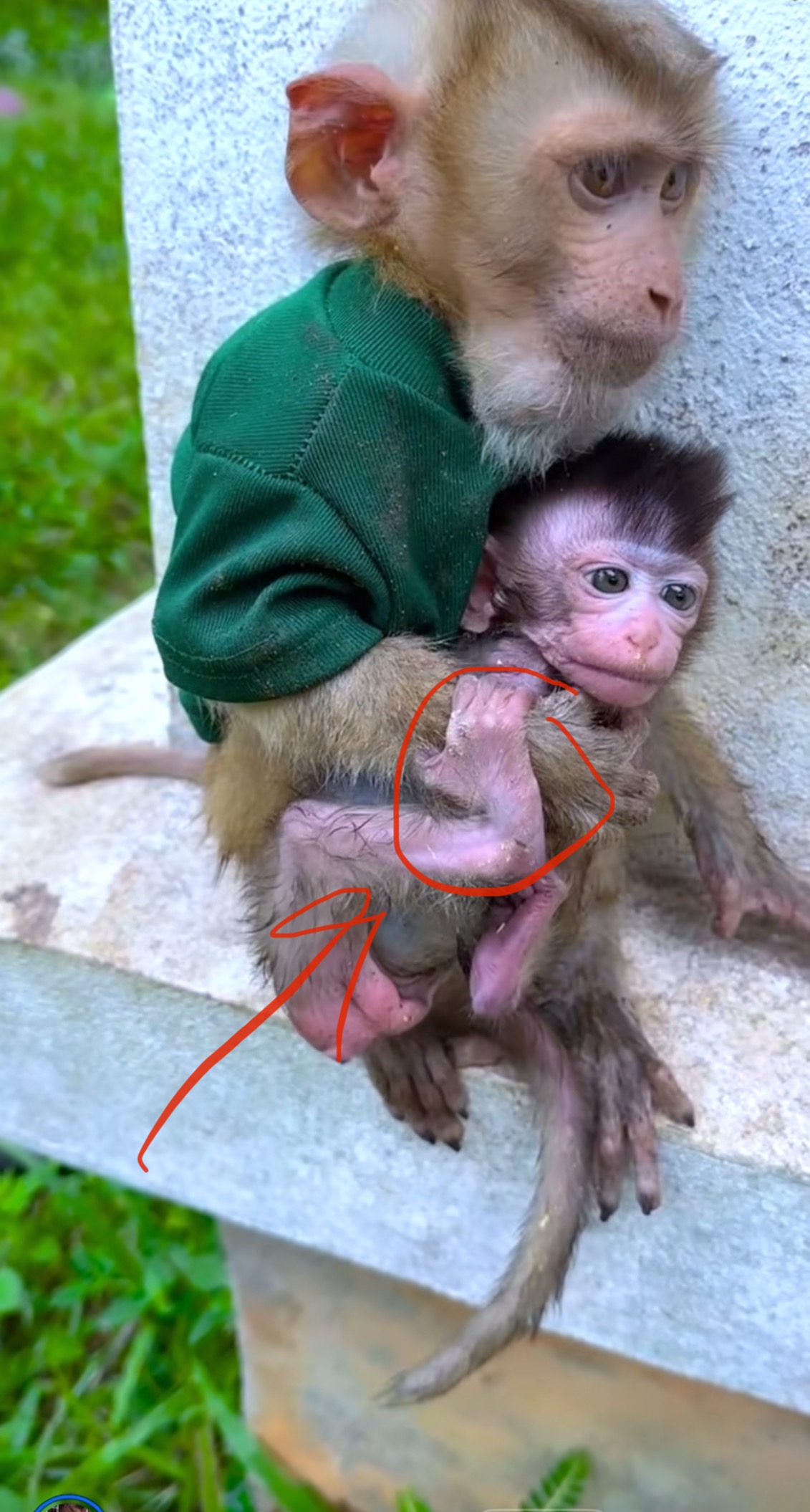
High in the tangled branches of a forest, where life usually moves to the rhythm of family groups and constant care, a newborn monkey faced the world completely alone. Separated from its mother just days after birth, the fragile infant went without food, warmth, and protection for several days—a situation that would be fatal for most newborn animals. This heartbreaking scenario highlights both the vulnerability of wildlife and the quiet resilience that exists even in the smallest creatures.
For newborn monkeys, a mother is everything. She provides nourishment through milk, regulates the infant’s body temperature, carries it through the trees, and protects it from predators. Without her, a newborn has almost no chance of survival. Its body is too weak to forage, its senses are still developing, and its cries often go unheard in the vastness of the forest. When this infant lost its mother—whether due to predation, illness, or human disturbance—it was left clinging to branches with instinct alone guiding it.
As the days passed without food, the newborn’s condition worsened. Hunger drained its energy, dehydration set in, and exposure to cold nights threatened its survival. Unlike adult monkeys, infants cannot store energy reserves. Each hour without nourishment pushes them closer to collapse. Yet, the tiny monkey continued to hold on, driven by a powerful instinct to live.
Stories like this are not as rare as many people assume. Habitat loss, deforestation, illegal wildlife trade, and human encroachment frequently separate animal mothers from their young. When trees are cut or forests are disturbed, mothers may flee in panic, accidentally leaving infants behind. In some cases, mothers are killed, leaving newborns completely defenseless. These silent tragedies often go unnoticed, hidden deep within shrinking natural habitats.
What makes such stories especially powerful is what they reveal about responsibility. When humans disrupt ecosystems, the smallest and weakest suffer the most. A newborn monkey without its mother is not just an individual loss—it represents a larger breakdown in the balance of nature. Each infant that fails to survive affects the future of the species and the health of the ecosystem as a whole.
In some fortunate cases, orphaned monkeys are discovered and rescued by wildlife workers or local communities. With intensive care, proper nutrition, and warmth, a few manage to survive and eventually join rehabilitation centers or protected groups. However, rescue is never guaranteed, and survival in the wild remains uncertain.
The story of a newborn monkey surviving days without food is both heartbreaking and inspiring. It reminds us of the extreme fragility of early life and the incredible strength that even the smallest beings can possess. More importantly, it urges us to reflect on how closely our actions are tied to the fate of wildlife—and how protecting mothers, habitats, and ecosystems is the only way to ensure that newborn lives are not forced to begin alone.