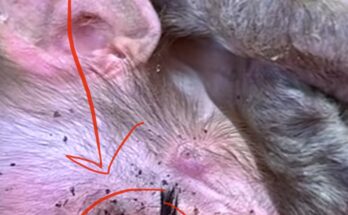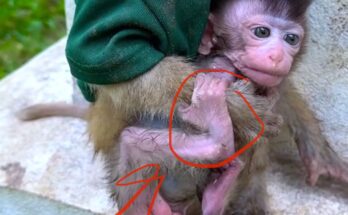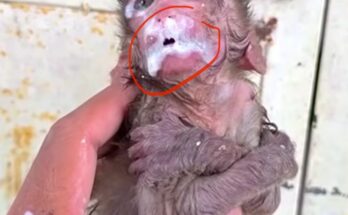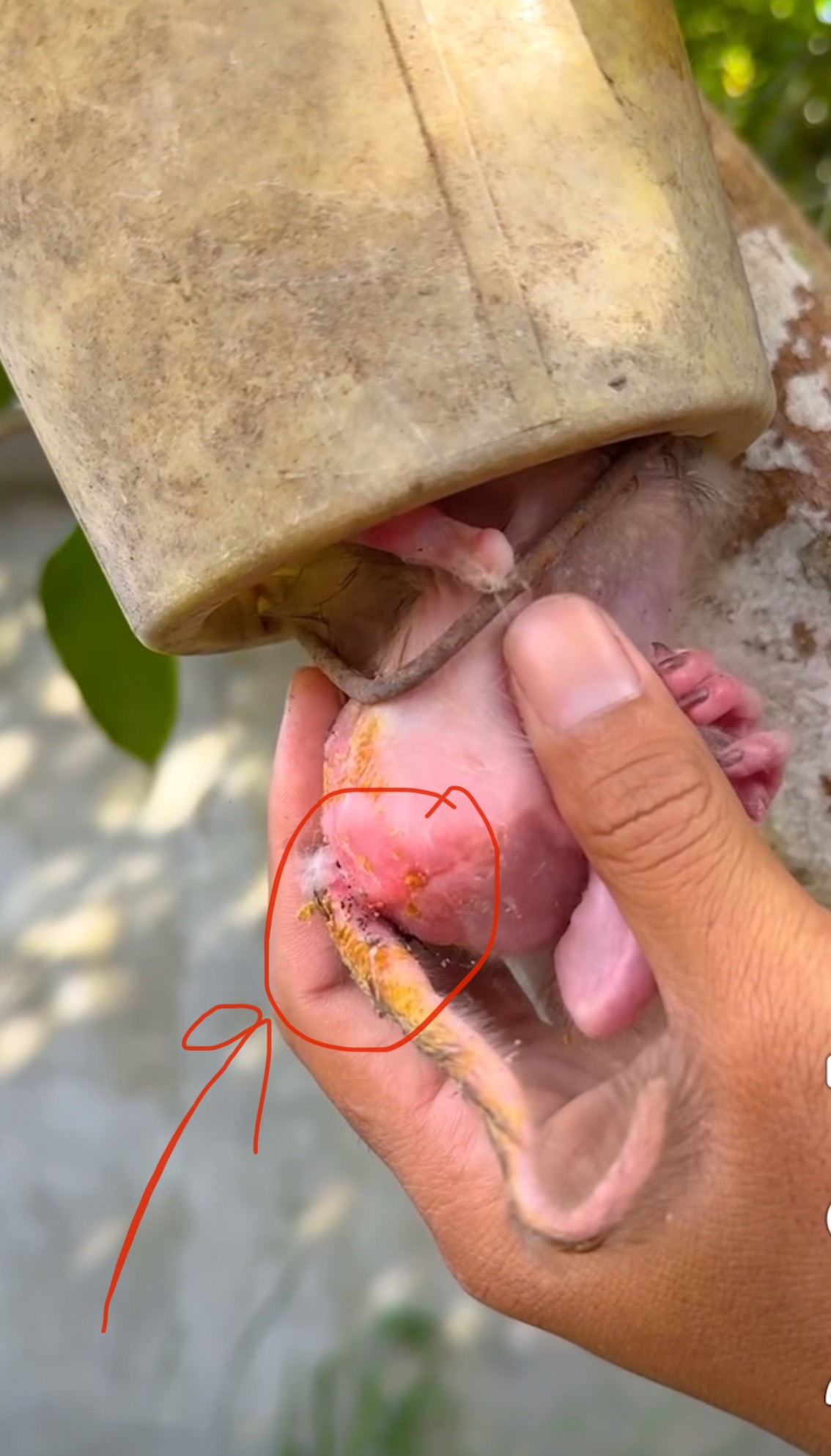
At dawn, when the forest should echo with birdsong and the soft movements of waking animals, a different sound broke the calm—a faint, distressed cry. Hidden beneath leaves and branches, a crude poacher’s trap had done what it was designed to do. Caught within it was a newborn monkey, no more than a few days old, separated from its mother and left helpless in a world that suddenly turned hostile.
This incident is not just a single sad story; it represents a much larger and ongoing crisis faced by wildlife across the globe. Poaching is often associated with large animals and illegal trade, but its impact reaches far deeper into ecosystems. Traps set for one species do not discriminate. They injure and kill whatever crosses their path, including the most vulnerable—newborn animals that stand no chance of escape.
Newborn monkeys rely entirely on their mothers for warmth, food, and protection. In the wild, the bond between a mother monkey and her infant is crucial for survival. When a baby is caught in a trap, that bond is abruptly broken. Even if the infant is rescued, the trauma of separation and injury can have lasting effects. Many rescued young animals require months or even years of rehabilitation before they can return to the wild, if they can return at all.
What makes this situation even more heartbreaking is how preventable it is. Poacher’s traps are often cheap, easy to set, and illegal in many regions, yet they remain widespread due to weak enforcement and economic pressures. Some are placed for bushmeat, others for profit through wildlife trafficking. Regardless of the motive, the outcome is the same: silent suffering hidden deep within forests, far from public view.
Rescue teams and wildlife conservationists play a vital role in responding to such incidents. When the newborn monkey was discovered, trained responders carefully removed it from the trap and provided immediate care. Beyond saving one life, these teams also document trap locations, gather evidence, and work with local communities to prevent future harm. Their work highlights an important truth—conservation is not only about animals, but also about people, education, and sustainable alternatives.
This story should serve as a wake-up call. Protecting wildlife requires more than sympathy; it demands action. Supporting conservation organizations, reporting illegal activities, and promoting awareness can make a real difference. Even small steps, like sharing stories that shed light on hidden cruelty, help build pressure for change.
The newborn monkey’s ordeal reminds us that forests are not empty spaces—they are homes filled with lives that matter. When we protect them, we protect the delicate balance of nature itself.