Deep within the humid green canopy of a Southeast Asian forest, a dramatic and heart-stopping scene unfolded when a newborn baby monkey slipped from a high branch near a rubber tree plantation. What began as a simple moment of exploration turned into a fight for survival — one that showcased the extraordinary instincts and devotion of a mother in the wild.
The troop of macaques had been traveling along their usual foraging route that bordered a grove of tall rubber trees. For adult monkeys, the high branches posed no challenge, but for a newborn only days old, every step was uncertain. While clinging to its mother’s chest, the tiny infant attempted to adjust its grip. That single moment of misjudgment was enough. The newborn slipped, tumbling through a cluster of branches before landing painfully among the thick roots of a rubber tree below.
The fall was violent enough to stun the baby. Its soft cries echoed through the plantation, attracting the immediate attention of the troop — but especially its mother. In an instant, the calm rhythm of forest life dissolved into chaos. The mother macaque leapt down the trunk with incredible speed, her alarm calls sharp and frantic. Other members of the troop formed a loose protective circle as she searched for her infant.
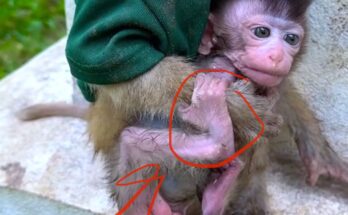
When she reached the baby, the scene was heartbreaking. The newborn lay on its side, weak and dazed, barely able to move. For wild animals, any moment of vulnerability can be fatal, whether from predators or environmental dangers. The rubber tree roots, though not sharp, formed deep crevices where the baby could have been trapped or injured further.
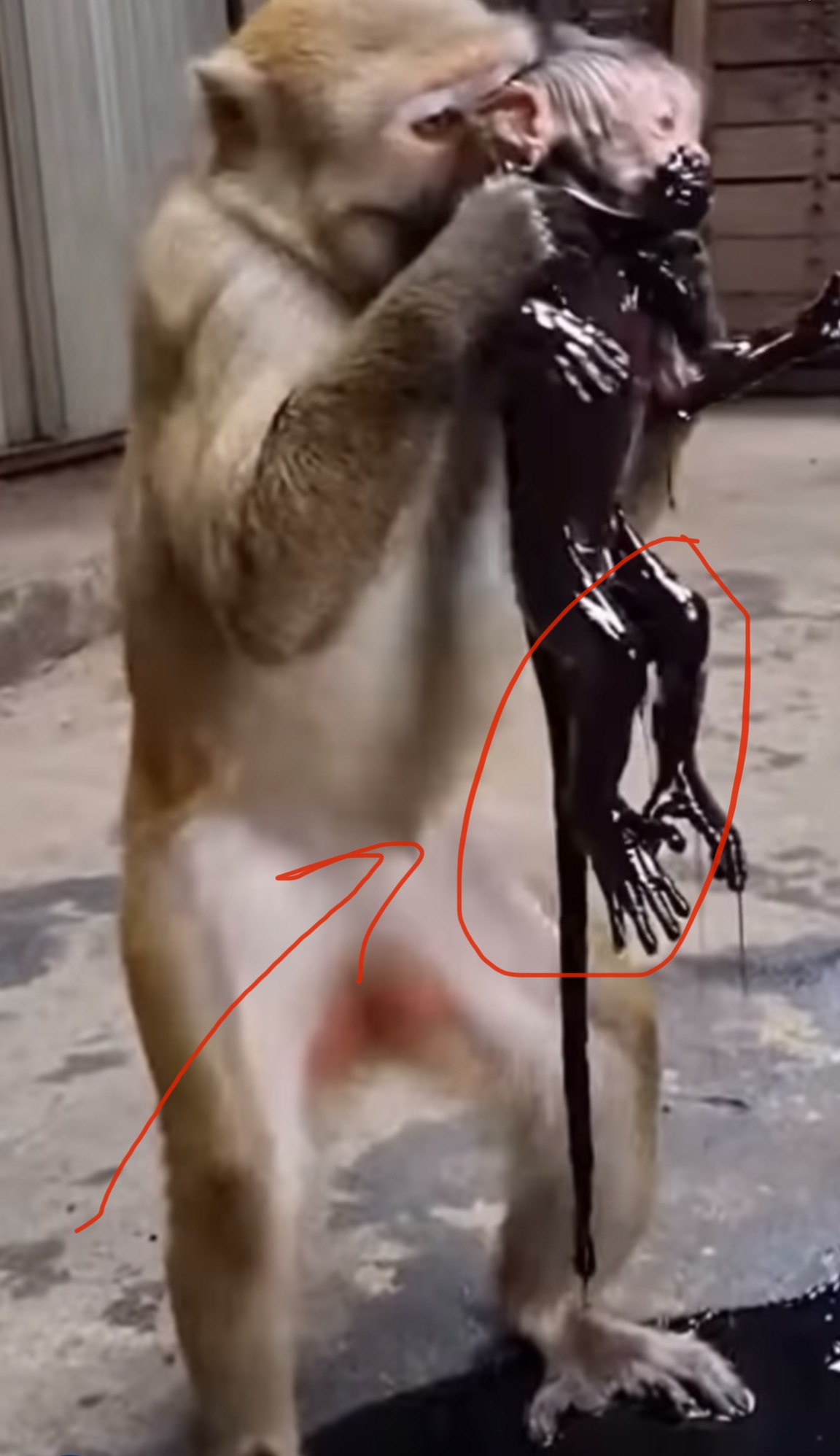
With trembling hands, the mother gently scooped her infant into her arms. She inspected it carefully — nudging, licking, and repositioning the tiny creature against her chest. Her behavior was a remarkable display of maternal intelligence: she checked the baby’s breathing, kept it warm, and shielded it from stress. Slowly, the infant’s cries softened. Its fingers curled into her fur, a sign that its strength was returning.
For several minutes, the mother remained crouched beneath the rubber tree, refusing to move until she was certain her newborn was safe. Finally, she carried the little one back up the branches, choosing a thicker, more stable path this time. The troop followed closely, offering support and awareness of potential threats.
Incidents like this highlight the fragile balance of wildlife living near human-influenced landscapes. Rubber tree plantations provide shelter and foraging opportunities, but they also present new dangers for animals that once lived exclusively in dense forest canopies. Yet, despite the risks, the resilience and instincts of primates continue to amaze researchers and nature lovers alike.
This heartwarming moment — a newborn saved by its mother’s swift and instinctive action — reminds us of the powerful emotional bonds that exist in the natural world. Every life, no matter how small, is fiercely protected by a mother’s love.