In the quiet hours of early morning, when the forest usually wakes to birdsong and rustling leaves, a heartbreaking struggle unfolded near a muddy waterhole. A newborn baby monkey, barely strong enough to cling to its mother, slipped and fell into thick mud. What followed was a powerful reminder of how fragile life can be—and how resilience and care can turn tragedy into hope.
The infant had been born only days earlier. Still learning how to grip branches and balance its tiny body, the baby monkey wandered too close to the edge of the mud while its troop foraged nearby. The ground, softened by recent rain, gave way beneath its weight. Within moments, the baby was trapped, unable to lift itself out. The mud, heavy and sticky, pulled at its small limbs, making every movement harder.
For newborn animals, even minor accidents can be life-threatening. Unlike adults, baby monkeys lack strength, coordination, and the ability to react quickly to danger. As the infant struggled, exhaustion set in. Its cries grew weaker, and the risk of suffocation or hypothermia increased with every passing minute.
What makes this story remarkable is not just the danger, but the response that followed. The baby’s distress calls alerted nearby monkeys, who gathered at a distance, clearly agitated yet unsure how to help. In many such situations, fear can cause animals to retreat. This time, however, help arrived in an unexpected way.
Human observers from a nearby conservation area noticed the commotion and quickly realized something was wrong. Trained to handle wildlife emergencies, they approached carefully to avoid frightening the troop further. Using gentle movements and simple tools, they freed the baby monkey from the mud, ensuring its airway was clear and its body supported.
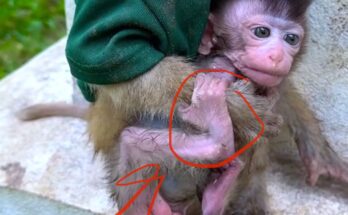
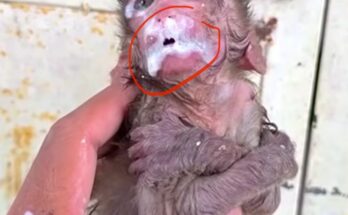
The rescue did not end there. The infant was weak and covered in mud, so it was cleaned, warmed, and checked for injuries. After careful observation, the rescuers made a crucial decision: reunite the baby with its mother as soon as possible. For young primates, a mother’s care is essential for survival, providing warmth, nourishment, and emotional security.
The reunion was a quiet but powerful moment. The mother recognized her baby immediately, holding it close as the troop slowly moved away. Against the odds, the newborn had been given a second chance at life.
This story is more than a rescue—it is a reminder of the delicate balance of nature. Newborn animals face countless dangers from the moment they are born, and even small environmental changes can have serious consequences. It also highlights the importance of wildlife awareness and responsible human involvement.
From a muddy trap to the safety of its mother’s arms, the baby monkey’s survival shows that compassion, quick action, and respect for nature can transform a moment of near loss into one of hope and renewal.