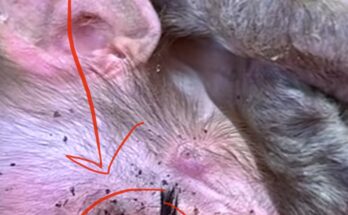
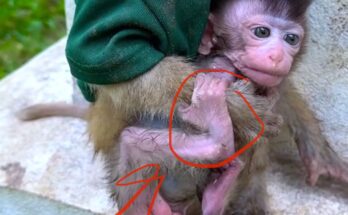
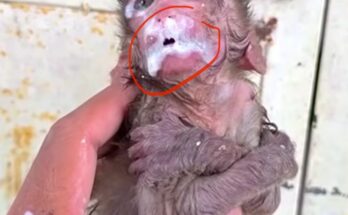
Deep within the lush canopy of a tropical forest, where sunlight filters gently through leaves and life thrives in vibrant harmony, a heartbreaking story has unfolded—one that sheds light on the cruelty of illegal wildlife trapping and the resilience of the innocent creatures who suffer because of it. This is the story of a poor little monkey whose life changed forever after being caught in a poacher’s trap, leaving one of its legs permanently paralyzed.
The young monkey, barely old enough to fend for itself, was exploring the forest floor in search of fruit when disaster struck. Hidden beneath a pile of leaves was a crude but deadly snare set by poachers. Designed to capture small animals for the illegal wildlife trade or bushmeat market, these traps are indiscriminate and unforgiving. As the monkey stepped onto the device, the metal jaws snapped shut, crushing its leg with brutal force. Terrified and in pain, the little creature struggled desperately to free itself, but the more it fought, the deeper the trap dug into its flesh.
By the time rescuers discovered the monkey—alerted by its weak, pitiful cries—it was dehydrated, exhausted, and badly injured. The trap had cut off circulation for far too long, causing irreversible nerve damage. Despite efforts by veterinarians to save the limb, the monkey was left with a paralyzed leg, a constant reminder of the suffering inflicted by human greed.
Poachers’ traps are a silent menace in forests around the world. They are cheap to make, easy to hide, and cause immense suffering to countless animals—from monkeys and deer to birds and even endangered species. These devices often go unchecked, harming not only the intended target but any creature unlucky enough to cross their path. The little monkey’s story is just one example of an issue far bigger than many realize.
Yet despite the cruelty it endured, the monkey’s story is also one of remarkable resilience. After receiving medical care and rehabilitation, the monkey began to adapt to its disability. Forest rescue workers observed it slowly regaining strength, learning new ways to climb and balance, and becoming more confident each day. Animals possess an incredible ability to adjust, even after experiencing trauma, and this young monkey is no exception.
Today, the monkey lives in a protected sanctuary where it is safe from poachers and can move freely without fear. Caretakers ensure it receives proper nutrition, enrichment activities, and companionship from other rescued primates. Though it may never return fully to the wild, it has found a second chance at life.
Stories like this remind us of our responsibility to protect wildlife and speak out against illegal hunting practices. Every trap removed, every poacher stopped, and every sanctuary supported brings us one step closer to a world where innocent animals no longer suffer needlessly.
The poor little monkey’s struggle is a powerful call to action: to value all living creatures and to fight for a future where forests remain safe havens, not hunting grounds.